
Port of Cape Town OCCS Demonstration Initiative
Why This Pilot Matters
The 5 Walls pilot is designed to demonstrate a practical African pathway for onboard carbon capture and port-side carbon handling. It is intended to show how captured vessel emissions can move through offloading, logistics coordination, and downstream industrial reuse rather than remaining only as a technical onboard process.
Pilot Objectives
- Africa’s first OCCS pilot
- Demonstrate practical offloading solutions
- Develop future carbon logistics infrastructure
- Enable industrial reuse pathways
- Position South Africa as a maritime decarbonisation leader
What the Pilot Will Demonstrate
The pilot is focused on practical execution across the ship-to-shore carbon value chain. This includes vessel-side carbon capture readiness, port-based offloading pathways, logistics planning, and industrial reuse opportunities.
Pilot Scope Areas
- Practical vessel emissions capture demonstration
- Liquid CO₂ offloading concepts
- Port logistics integration
- Industrial reuse pathway development
- Future scaling roadmap development
Pilot Operational Flow
Step 1 — Vessel Emissions Capture
Captured emissions begin onboard through the OCCS pathway.
Step 2 — Transfer to Offloading Route
Captured CO₂ is prepared for transfer using suitable offloading concepts.
Step 3 — Port Logistics Coordination
Port-side handling and logistics pathways are integrated into the pilot pathway.
Step 4 — Industrial Reuse or Downstream Pathway
Captured CO₂ moves into reuse pathways or broader value chain development opportunities.
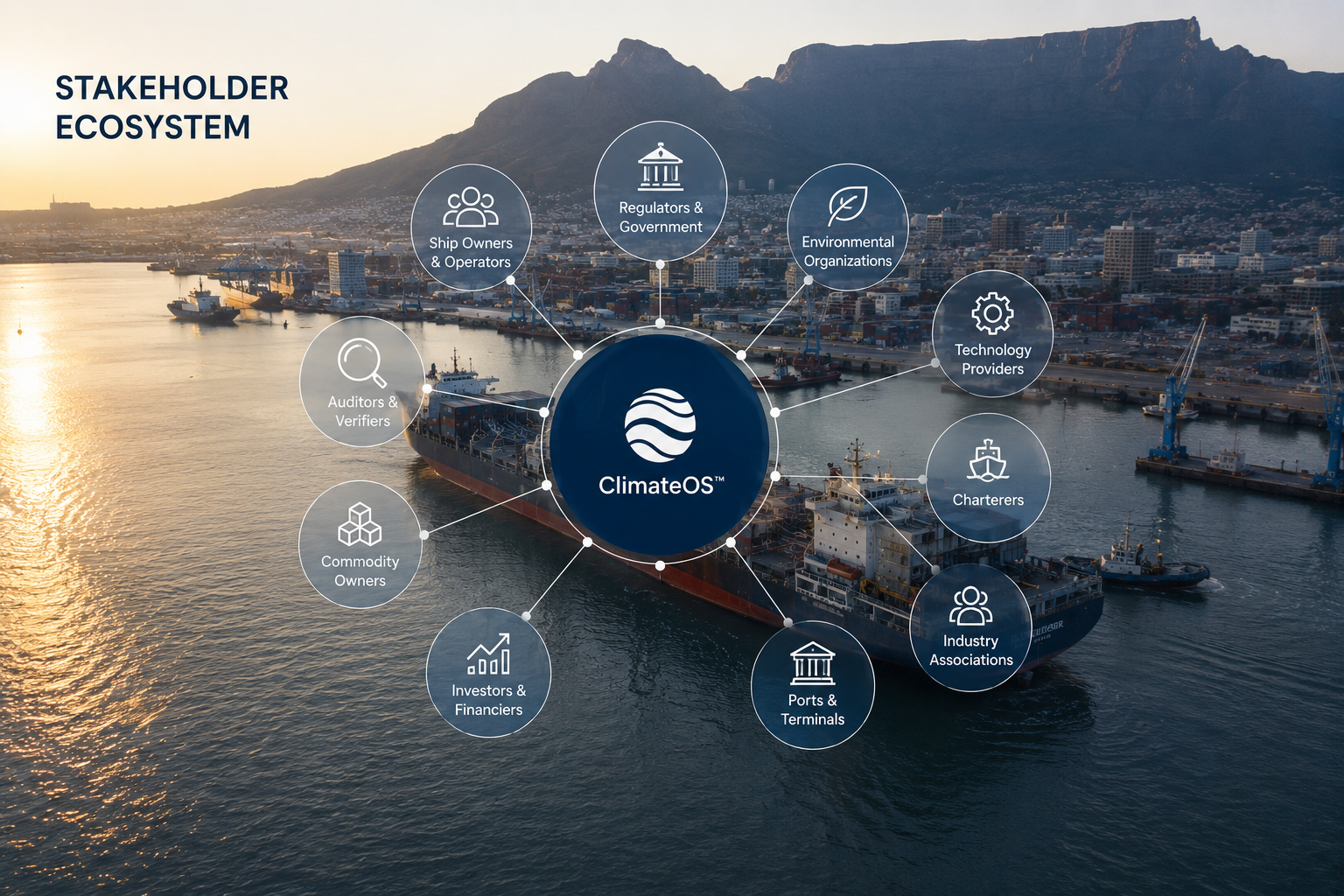
Stakeholder Ecosystem
The pilot is designed as a collaborative ecosystem initiative rather than a standalone technical demonstration. It depends on coordination between vessel operators, ports, regulators, technology providers, logistics partners, and potential industrial users.
Stakeholders
- Shipowners and vessel operators
- Ports
- Regulators
- Technology providers
- Logistics operators
- Industrial buyers / industrial reuse partners

